
On a cold, rainy winter’s day outside the walls of Helping Hand of Greater Little Rock, Margaret Douglas sat at the front desk when the door opened. In walked an exhausted mother, huddled close to her little boy.
“It was raining that day,” Margaret recalled. “Her shoes were just barely on her feet, and we didn’t have anything in her size.”
After double and triple checking the Helping Hand clothing store for shoes, Margaret realized the woman’s shoe size was her own.
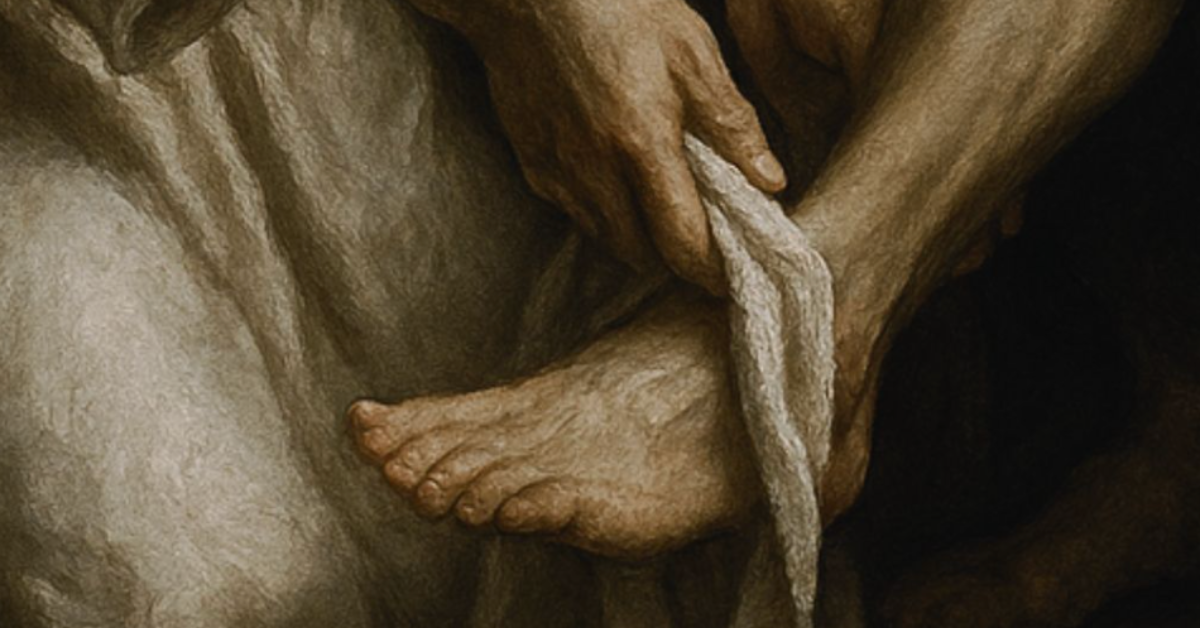
She took the shoes off her feet and traded them for the woman’s tattered sneakers.
“Giving her my pair of shoes allowed me to walk the walk that she was walking,” Margaret said. “To have my feet on the ground, to see what it was like.”
Then only a volunteer with the charitable organization, this simple encounter helped Margaret realize the Bible was coming to life at Helping Hand.
A Diverse Religious Upbringing
The youngest of seven, Margaret grew up in a loving household of devout Baptists. She enjoyed participating in church and Bible groups with various denominations in her hometown.
“I always said, ‘Presbyterian, Methodist, Baptist — what mattered was we all serve the same God.’”
Margaret frequently attended services with her family and friends — but it was her mother who truly fostered her servant’s heart.
“My mother was so generous,” she said. “She would talk to everybody about God and our religious beliefs. She just wanted everybody to be in church. And if we were poor, I never knew it. My mother always had a loving heart. We were about two miles from the train station, and the homeless men would gather back there. My mother … would make them sandwiches while they sharpened her knives.”
Margaret grew up watching her mother help the poor and vulnerable in the surrounding community, tying it back to living out her faith. Her mother’s faith inspired Margaret to work in health clinics and organizations that helped those most in need.
Navigating an Interfaith Family
When she was 20, Margaret married her husband, Roger “Peewee” Douglas, a devout cradle Catholic. Several years later, the couple had two small children together. Every weekend, they found themselves trying to navigate a blended-faith family.
“Every Sunday, we would take them and go first to Mass, and then we’d leave Mass and go to the little Baptist church,” Margaret said. “And we would do that every Sunday.”
But it was one weekend in particular that Margaret had a spiritual development.
“One Sunday, our son had come down with a cold. We’d given him some medicine and went to Mass,” Margaret recalled. “We went to Mass, then we got to the Baptist church, and he was so drowsy, he curled up under the pew and fell asleep. I realized that if I really believed what I said about all of the denominations serving the same God and everything else, then we only needed to go to one church. I decided that this was the time for me to be with my husband.”
Margaret decided to talk to her mother about her decision to convert to Catholicism.
“She said, ‘As long as you’re in somebody’s church.’ As long as Mama said that … that made the difference in my life.”
Commitment to Catholic Social Justice and Charity
Margaret converted to Catholicism when she was 25. She spent the next 50 years involved in her parish and joining numerous Christian organizations devoted to social justice and charity, such as Pax Christi Little Rock.
Just six months after Margaret retired, she got a letter in the mail about volunteering for Helping Hand. She called Gayle Priddy, former executive director of the nonprofit, and began volunteering shortly after.
“I could feel my mother’s spirit all over that place,” Margaret said. “We had food to share with other people.”
Doing More with Less
Helping Hand, founded by Catholic Charities of Arkansas in 1970, helps thousands of Arkansans in Pulaski County every month. They give bags of canned goods and other non-perishables, as well as clothing and shoes, to those in need. 2025 has been a challenging year for many organizations working with people living on the margins, and Helping Hand is no exception.
Federal funding cuts impacted the United States Department of Agriculture, which meant less food to give to the hungry and less grant money available for organizations. Another challenge was added with threats to federal assistance programs, like Social Security and SNAP. With Arkansans uncertain of where they might find their next meal and when, more people than ever are reaching out to Helping Hand — an organization trying to do more with less.
The Catechism of the Catholic Church (2443-2449), a large handbook that outlines the beliefs and practices of the Catholic Church, emphasizes that each Christian has a personal duty to care for those in need. The importance of this statement rings especially true when government and state institutions fail to care for their people — it’s Christians who stand in the gaps.
“I’m worried about our people,” Margaret confessed. “The things that we do here at Helping Hand now we’ll probably be doing more of in the years to follow.”
But every morning, as volunteers come in for work, everyone joins hands in a prayer circle to start the day. That’s when Margaret often witnesses miracles — a grocer calling to deliver a truck full of extra food or a school with sacks of cans they unexpectedly collected for the organization.
IT’S HARD TO DO ANYTHING WHEN YOU’RE HUNGRY
It’s hard to do anything when you’re hungry, whether it’s learning, working, or resting — and no one knows this better than Jesus Christ.
Matthew 15:36 reminds us that Jesus knew before He could effectively preach, the gathered crowd of over 5,000 would need to be fed first. Then, they could really learn and carry out His teachings in their communities.
Stepping out from the crowd, one boy brought forward five loaves and two fish. Miraculously, Jesus multiplied the loaves and fish to be enough to provide for everyone.
Interestingly, this miracle is the only miracle — other than the Resurrection — mentioned in each of the four Gospels. This miracle only happened because one person was willing to share what little food they had with Jesus.
The humility of the young boy in the story of loaves and fishes can be seen in the volunteers and staff at Helping Hand, and the people who, in spite of economic challenges in our world today, are willing to share what they have with others. Miraculously, as Jesus did before his sermon with loaves and fish, He ensures that all who find their way through the door at Helping Hand are fed.
TREATING ALL WITH DIGNITY
Margaret realized at organizations like Helping Hand, she could “stand in the gap” and help others. She made an effort to compliment everyone when they came in — to make them feel loved and to let them know that they are her neighbor. It began to make a difference.
“Now, when people come in, they call me Mama, Grandma, whatever they want to call me. Some people call me ‘The Lady With the Dreads,’” she said with a laugh, gesturing to her long silver dreadlocks pulled back into a ponytail. “I want to listen. I want to know. I want you to notice that somebody cares.”
That meant treating people who often felt invisible with dignity and love.
“A lot of my gentlemen who come in, I call them ‘Mister.’ Mr. Smith, or Mr. Jones, because nobody’s ever called them ‘Mister’ anything before,” she said. “And I’ve always complimented the ladies — their outfits or the hairdo they happen to have that day. Because it goes a long way.”
Today, Margaret is the new Executive Director of Helping Hand, following in the footsteps of generations of volunteers in her family. With the holidays coming up, Margaret is doing everything she can to make sure people are fed and clothed, not just with green beans and tennis shoes, but with the love of Christ and God-given dignity.
“We’re all trying to get to the same place – whether you’re Catholic, Baptist, Presbyterian, or whatever,” Margaret said. “We’re still reading from basically the same book. We’re still trying to get to the same place — Heaven — by way of the same Jesus Christ and God. And maybe it has something to do with age. One day, they’re gonna remember this old grey-haired lady, just like I remember my old grey-haired mother. I know now, deep in my soul, that I was put here for a reason. And I’m trying, for whatever time I have here, to fulfill that.”